
Technical Standards
The technical standards for the DeSales University Physician Assistant Program have been established to ensure that students have the ability to demonstrate academic mastery, perform clinical skills, and communicate clinical information.
Technical Standards for Admission, Academic Progress, and Graduation
These standards ensure that every student has the academic and physical ability to meet the competencies required by national accrediting and professional bodies (NCCPA, ARC-PA, PAEA, AAPA) and to participate fully in clinical activities defined by the ACGME. These activities include patient care, medical knowledge, practice-based learning, communication skills, professionalism, and systems-based practice. Students must meet these standards for admission and maintain them throughout the Physician Assistant Program. If a student cannot meet these standards, with or without reasonable accommodations, they may be advised to consider an alternative career path.
All students must independently demonstrate the following:
General Abilities
Students must have:
-
Functional vision, touch, hearing, taste, and smell to accurately gather and interpret information.
-
The ability to perceive pain, pressure, temperature, position, vibration, balance, and movement.
Observational Abilities
Students must be able to:
-
Observe demonstrations, exercises, and patients both up close and at a distance.
-
Recognize verbal and non-verbal cues.
Communication Abilities
Students must be able to:
-
Speak clearly and hear sufficiently to communicate.
-
Gather and share patient information in spoken and written English.
-
Describe changes in a patient’s mood, activity, and posture.
-
Communicate effectively and sensitively with patients.
-
Read at a level necessary for coursework and clinical care.
-
Write or type accurate medical documentation in a timely manner.
Sensory and Motor Abilities
Students must:
-
Have fine and gross motor skills for palpation, percussion, auscultation, and other basic diagnostic tasks.
-
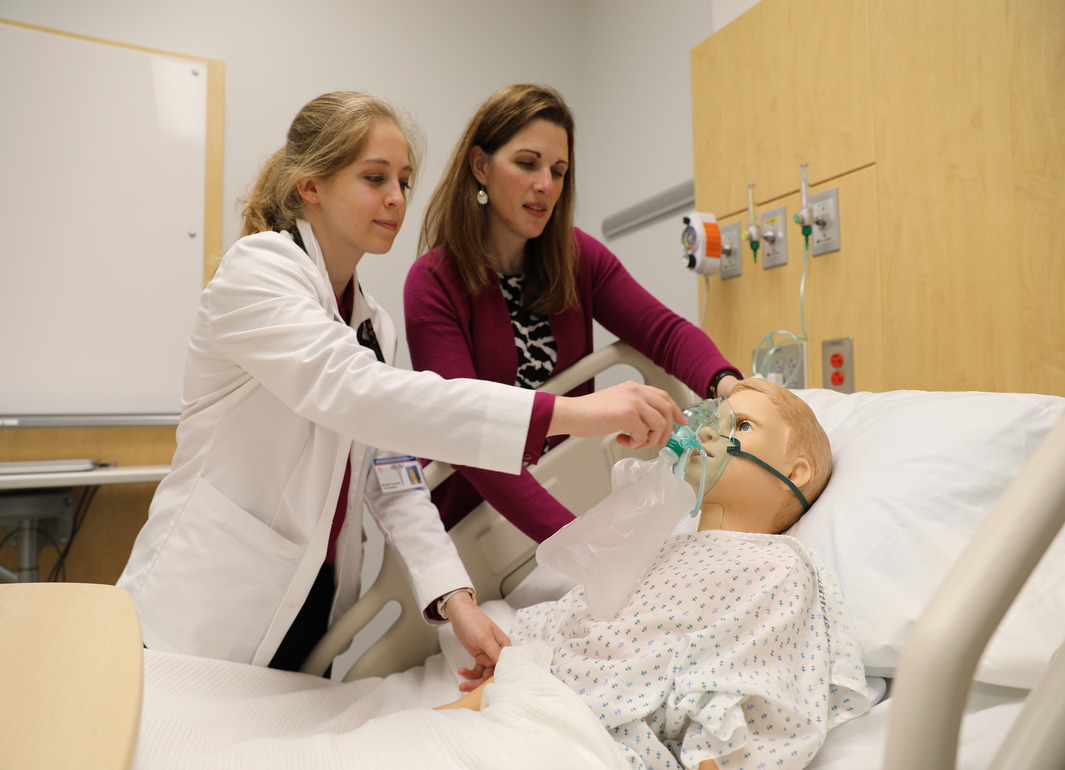
Perform essential medical procedures such as airway management, catheter placement, suturing, phlebotomy, bleeding control, simple obstetrical maneuvers, and sustained standing or retraction during surgery.
Critical Thinking Abilities
Students must:
-
Independently obtain and interpret medical histories and exam findings.
-
Formulate diagnoses and reasoning using information from examinations, labs, peers, instructors, and medical literature.
-
Retain and process information efficiently and accurately.
Behavioral and Social Attributes
Students must:
-
Use their intellectual abilities, exercise sound judgment, and complete responsibilities promptly, even in stressful or emergency situations.
-
Build effective, empathetic relationships with patients.
-
Adapt to changing environments and learn despite uncertainty.
-
Respond appropriately to supervision and act independently when needed.
If an applicant indicates they cannot meet these standards without accommodation, the College will determine whether reasonable accommodations can allow them to meet the requirements without compromising patient safety or essential educational experiences. Students with documented disabilities who wish to request accommodations should contact the Office of Student Accessibility Director (Dooling Hall Room 26, ext. 1453).
